
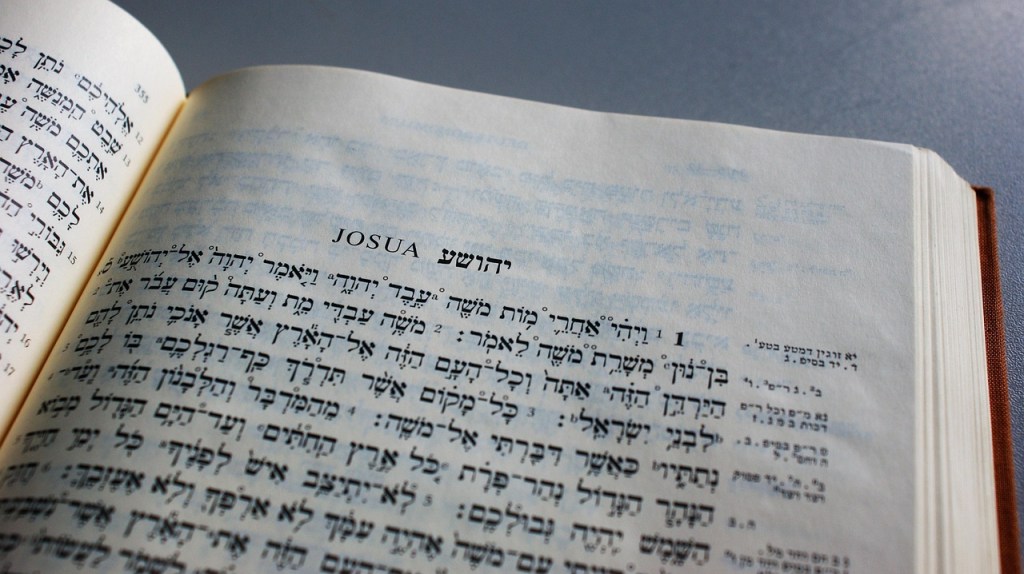
Have you ever whined to God? Be honest. Even after seeing the walls of Jericho fall down and succeeding in battle there with no losses, Joshua whined to God when “the men of Ai killed about thirty-six of their men” (Joshua 7:5, ESV).1
Then Joshua tore his clothes and fell to the earth on his face before the ark of the Lord until the evening, he and the elders of Israel. And they put dust on their heads. And Joshua said, “Alas, O Lord God, why have you brought this people over the Jordan at all, to give us into the hands of the Amorites, to destroy us? … O Lord, what can I say, when Israel has turned their backs before their enemies! For the Canaanites and all the inhabitants of the land will hear of it and will surround us and cut off our name from the earth. And what will you do for your great name?” (Joshua 7:6–9)
Joshua was devastated by the losses and fearful of the future. Because, uh-oh, what would their enemies think about the power of God, now that they had easily defeated His people? They’ll wipe us out!
Wait a minute. Who does that sound like? Isn’t this what the other ten spies, who were sent from Kadesh Barnea with Joshua and Caleb, had whined about: that the big, scary guys in Canaan would step on them like grasshoppers? And furthermore, Joshua wanted to know, what was God going to do to defend His reputation?
The Lord said to Joshua, “Get up! Why have you fallen on your face? Israel has sinned; they have transgressed my covenant that I commanded them; they have taken some of the devoted things; they have stolen and lied and put them among their own belongings. Therefore the people of Israel cannot stand before their enemies…” (Joshua 7:10–12).
God’s people could not move forward into the blessings He had prepared for them until they had dealt with their sin.
This is a recurring theme in Scripture.
In Isaiah 58, God told Isaiah, “Cry aloud; do not hold back; lift up your voice like a trumpet; declare to my people their transgression, to the house of Jacob their sins” (Isaiah 58:1).
I wonder if Isaiah thought, “Oh, they’re going to love that!” Have you ever had an uncomfortable assignment from God?
God said to Isaiah, “Yet they seek me daily and delight to know my ways, as if they were a nation that did righteousness and did not forsake the judgment of their God. They ask of me righteous judgments; they delight to draw near to God” (Isaiah 58:2).
As if they were righteous. Meaning they thought they were okay, but they weren’t! They had rejected what God had commanded, but they thought they deserved to be heard anyway, and they were going through the motions to please God, but their hearts weren’t in it. And yet, they seemed to be indignant when their prayers weren’t answered, as if God owed them something.
“Why have we fasted, and you see it not? Why have we humbled ourselves, and you take no knowledge of it?” (Isaiah 58:3)
This is textbook whining. We’re acting as if we love you. Why don’t you answer?
What is God’s response?
Behold, in the day of your fast you seek your own pleasure, and oppress all your workers. Behold, you fast only to quarrel and to fight and to hit with a wicked fist. Fasting like yours this day will not make your voice to be heard on high (Isaiah 58:3–4).
Have you noticed that God doesn’t just look at what we’re doing outwardly; he looks at why we’re doing it? If we’re fasting to make up for something else we’re doing wrong, to sort of balance the scales, that’s not God’s goal for a fast.
Is such the fast that I choose, a day for a person to humble himself? Is it to bow down his head like a reed, and to spread sackcloth and ashes under him? Will you call this a fast, and a day acceptable to the Lord? (Isaiah 58:5)
Rhetorical question.
“Is not this the fast that I [God] choose: to loose the bonds of wickedness, to undo the straps of the yoke, to let the oppressed go free, and to break every yoke? (Isaiah 58:6)
God’s purpose for fasting is:
- To loose the bonds of wickedness
- To undo the straps of the yoke
- To let the oppressed go free
- To break every yoke
Remember: God’s purpose for fasting is liberty from bondage.
What’s binding you? What is preventing you from moving in the same direction God is moving? Are you tethered to the dock? Sailing against the wind?
I’m grateful for Jonathan Cahn’s insightful devotional, the Book of Mysteries. One of my favorite mysteries is The Ruach (Hebrew for wind, breath, or spirit). Cahn’s first-person character, a traveling student, is led into a desert plain to learn about the wind:
It was a windy day, so windy it was almost violent.
“Come,” said the teacher. He was asking me to walk against the wind’s blowing. So I did.
“What is it like to walk against the wind?” he asked.
“It’s a struggle,” I replied.
“In the language of Scripture,” he said, “the word for wind is ruach. But it has another meaning; it also means the Spirit.
“In the same way,” he said, “when you walk against the Spirit, it creates a drag on your life. Everything you do becomes harder. It takes more energy to do less. So when you go against His Spirit, you’re fighting against the Wind…
“The spirit is the Holy Spirit. Therefore, it blows in the direction of the holy, and blows against the direction of the unholy. Now try something else. Turn around and walk back, the same way you came.”
So I did. I was now walking in the direction of the wind’s blowing.
“And what was that like?” he asked.
“It was much easier,” I said.
“That’s because there was no drag,” he said. “You were walking in the direction of the wind. And the wind helped you walk. It moved you ahead. It made your walking easier. So when you walk against the wind, it creates drag. But if you turn around, then the wind gives you power. So it is with the Spirit. If you turn, if you change your course, if you repent, if you walk in the Spirit, then the drag will disappear. Then the Spirit will empower you and will move you forward. And then everything you do, that you must do, will become easier.”2

Honoring God with a fast does not guarantee that you won’t have problems; it avails you to the Power who can get you through them.
If you feel called to fast, consider that God may be preparing you for a season of effective ministry. This begins with the uncomfortable process of dealing with our sin: moving it out of of the way so there’s nothing hindering our walk with God or our fruitfulness.
Maybe your sin is the reason for your fast. You know you need to change, but you don’t know how. Bring that thing to Jesus. Pray about it during your fast. If it’s an addiction, I don’t recommend that you commit to abstaining from it as part of your fast. For example, if you’re trying to quit smoking, so you’ve made smoking the thing you’re fasting from, but then you slip and have a smoke, you have ruined the fast. However, if you make smoking the prayer focus of your fast and then you slip, you can just keep fasting and praying about it – maybe more fervently.
I’m fasting and praying to be more focused on Jesus and more effective for His kingdom. I pray that anyone reading this would be blessed by it and not feel falsely burdened to do something God is not calling you to do.
Remember: God’s purpose for fasting is liberty from bondage.
- “Joshua 7 (ESV) – But the people of Israel.” Blue Letter Bible. Accessed 4 Jun, 2025. https://www.blueletterbible.org/esv/jos/7/1/p1/s_194001
- Cahn, Jonathan. The Book of Mysteries (Lake Mary, FL: FrontLine, Charisma Media, 2016, 2018), Day 4.


Leave a Reply